Coffee trial: is it bad for your health? Beverage acquitted because ‘not dangerous’, but better only three a day

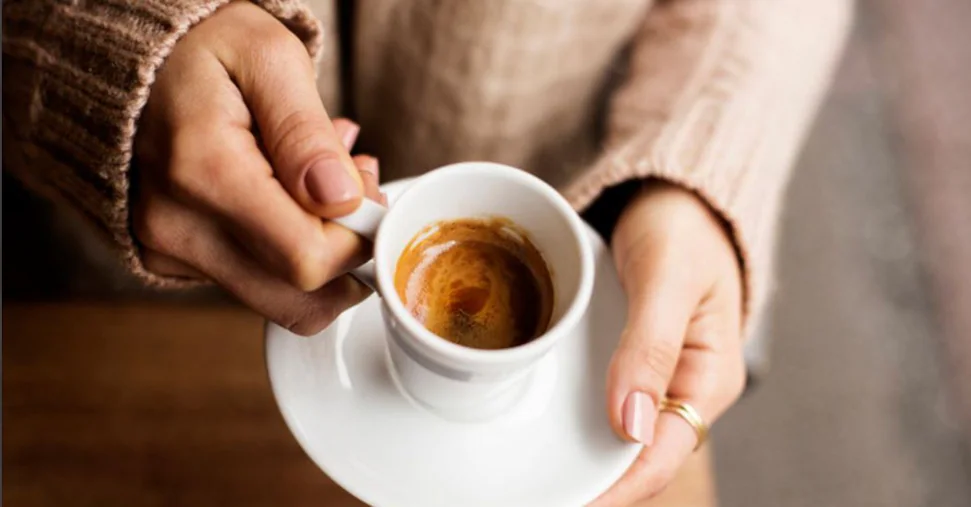
With 35 billion cups drunk a year in Italy, coffee has been ‘acquitted’, albeit with a ‘conditional’: it is not bad for your health as long as you limit yourself to three cups a day and with caution for heart patients or pregnant women; an absolute no for children and adolescents. This was the verdict of an unusual ‘trial’ staged in Milan, a debate organised by the Order of Surgeons and Dentists of the Province of Milan. The protagonists of the debate were the president of the Court of Milan Fabio Roia, the public prosecutor Tiziana Siciliano, the defence lawyers, Ilaria Li Vigni and Giorgia Andreis, the expert and forensic doctor Umberto Genovese and various witnesses and medical experts.
The process: is coffee good or bad for you?
As mentioned at the end of this unusual hearing, the Court ‘acquitted the defendant pursuant to Article 530(2) of the Code of Criminal Procedure, noting that responsibility was not proven beyond reasonable doubt’. The charge based on Article 444 of the Criminal Code, i.e. ‘danger to public health’, was therefore ‘dismissed’. In the grounds, however, it was clarified that ‘the subject requires an articulated and not simplified reading’. In particular, the judge emphasised ‘the need to distinguish between caffeine and coffee’, recalling the principle that ‘excessive consumption should be avoided’ and identifying, ‘in line with the minimum parameters of the guidelines, an indicative threshold of no more than 3 cups of Italian coffee per day’. It also reiterated ‘the difference between healthy people and people with cardiovascular, neurological or sleep disorders’. Staging a trial to assess the risks and benefits of food is now a tradition for the Milanese Medical Association, which has already put milk, red meat, sugar, salt and wine on the stand in the past. “We have once again chosen to tackle a very concrete issue, one that touches everyone, starting with the simplest question: is coffee good for you or bad for you?”, explains the president of the Milan Bar Association, Roberto Carlo Rossi. “We wanted to offer the public the elements to get an idea and entrust the medical community with the task of continuing the debate. Thanks to the jurors of the Federazione nazionale degli Ordini dei medici chirurghi e degli odontoiatri Fnomceo (the president Filippo Anelli with Roberto Monaco, Pierluigi Vecchio) and the Milan Ordine di Milano (Giuseppe Deleo and Andrea Senna), the judge, at the end of a great trial work,’ remarks Rossi, ‘decided for acquittal, albeit with various indications on quality and consumption limits.
The reasons for the prosecution
Coffee ‘is not just a pleasure, but a psychoactive substance that deserves caution’, is the prosecution’s key motivation. ‘What is considered an innocent gesture can actually hide serious implications,’ warned Stefano Carugo, director of the Uoc of Cardiology at the Policlinico di Milano. ‘In vulnerable people, coffee consumption can increase the risk of arterial hypertension, chronic insomnia, palpitations, and anxiety crises. In children and adolescents it should not even be proposed’, while ‘in pregnancy, the main scientific societies recommend caution. Caffeine has real cardiological and neurological effects: consumption is never entirely risk-free, especially in those who do not perceive its potential impact. Even beverages with a high caffeine content, which are very popular among young people today,’ the specialist pointed out, ‘can lead to even significant adverse events. Watch out also for possible damage to the mouth, continued Lucia Giannini, dentist and secretary of the Milan Dentists’ Association Commission: ‘Coffee consumption is traditionally associated with well-known negative effects, such as dental pigmentation and erosive potential. But coffee and its components also exert a significant influence on the oral microbiota, periodontal tissues and alveolar bone metabolism,’ warned the expert. Also testifying for the prosecution were Luigi Ferini Strambi (Head of the Centre for Sleep Medicine – Neurology Unit, San Raffaele Turro Hospital Milan), Diego Fornasari (Director of the School of Specialisation in Pharmacology and Clinical Toxicology, University of Milan) and Laura Prosperi (food historian at the Centre for Research on Sustainable Food at the Bicocca University in Milan).
Defence: coffee can also extend life
Then the floor was given to the defence: ‘If taken with balance, coffee can even extend life,’ is the thesis. ‘Coffee is not a poison,’ said Nicola Montano, Professor of Internal Medicine at the Policlinico di Milano. ‘Recent studies on more than 1 million people show that moderate consumption is associated with a lower risk of type 2 diabetes, stroke, depression and general mortality. Not only that: the most solid literature points to significant benefits on the liver, cognitive function and quality of life. In healthy adults,’ he pointed out, ‘drinking between three and five coffees a day can even be good for your health’. Also heard as defence witnesses were Michele Crippa (gastronome and lecturer in Food Science and Technology), Anete Dinne (gastronome and coffee expert) and Gianpiero Manes (head of the Uoc Gastroenterology Asst Rhodense). The defendant coffee’ was also heard, in the person of Carlos Eduardo Bitencourt, Founder and Ceo of Cafezal. ‘When talking about coffee and health,’ he said, ‘the first question to ask is which coffee we are talking about. Coffee is a complex agricultural raw material, like oil or wine, and its quality depends on every step of the chain: from growing to roasting, from storage to serving. No one would ever think of comparing an oil made from out-of-season, rotten, inexpertly processed olives to a fine oil. Yet this is what happens with coffee. Unfortunately, there is coffee that is badly treated, incorrectly stored, oxidised or served at excessive temperatures, which is unpleasant to the taste and potentially harmful. But there is also another reality, that of quality coffee, based on care, expertise and attention to social and environmental impact. It is to this type of coffee that many scientific studies refer that highlight its health benefits, from the heart to the brain. A coffee that narrates territories, cultures and quality, and that should be valued for what it really is, not as an indistinct product’.